> For the complete documentation index, see [llms.txt](https://docs.imerit.net/llms.txt). Markdown versions of documentation pages are available by appending `.md` to page URLs; this page is available as [Markdown](https://docs.imerit.net/labeling/labeling-tools/relation/group-relation.md).
# Group Relation
Overview of the Group Relation tool in Ango Hub
The Group Relation labeling tool allows you to create a relation between two or more annotations.
{% hint style="info" %}
The Group Relation tool is supported across the Audio, Image, Video, DICOM, PDF, and Text labeling editors.
{% endhint %}
### How to add a Group Relation tool to your project
From the project’s *Settings* tab, enter the *Label Set* section.
Click on *Add Category*. From the list that appears, click on *Group*.
A new row will appear named *Group*. Click on it to expand it.
Give your group relation tool a title and description.
Enable the *Required* toggle if you want to force labelers to create a group relation for each asset. When the toggle is disabled, labelers will be able to save and move to the next asset without creating the single relation.
## How to Draw a Single Relation
There are two ways to add a group relation in Hub.
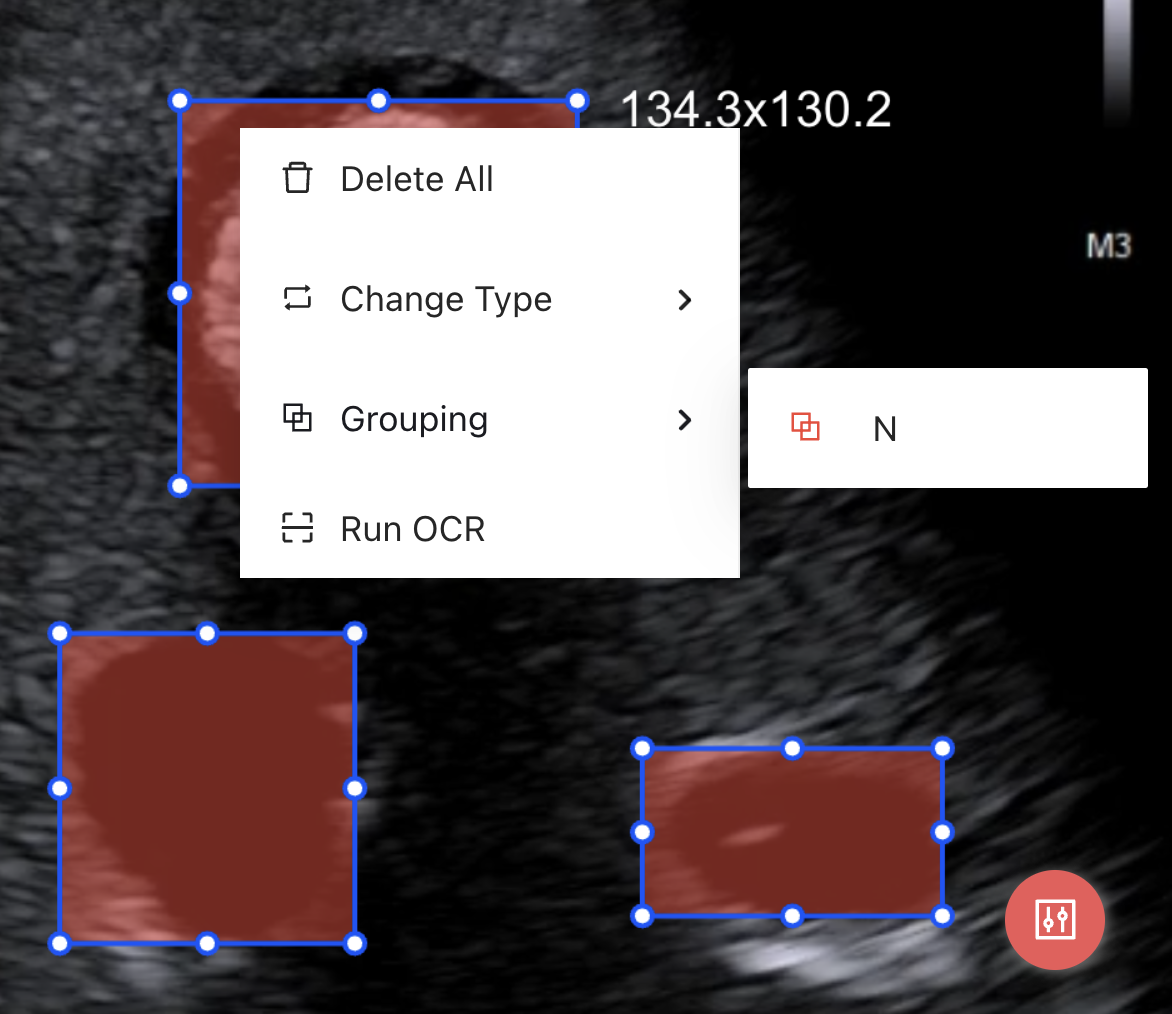
1. Click on the first label to include in the group relation. Then, shift-click on all other annotations you wish to include. Right-click on any one of them, and select your group relation under the *Grouping* menu item:
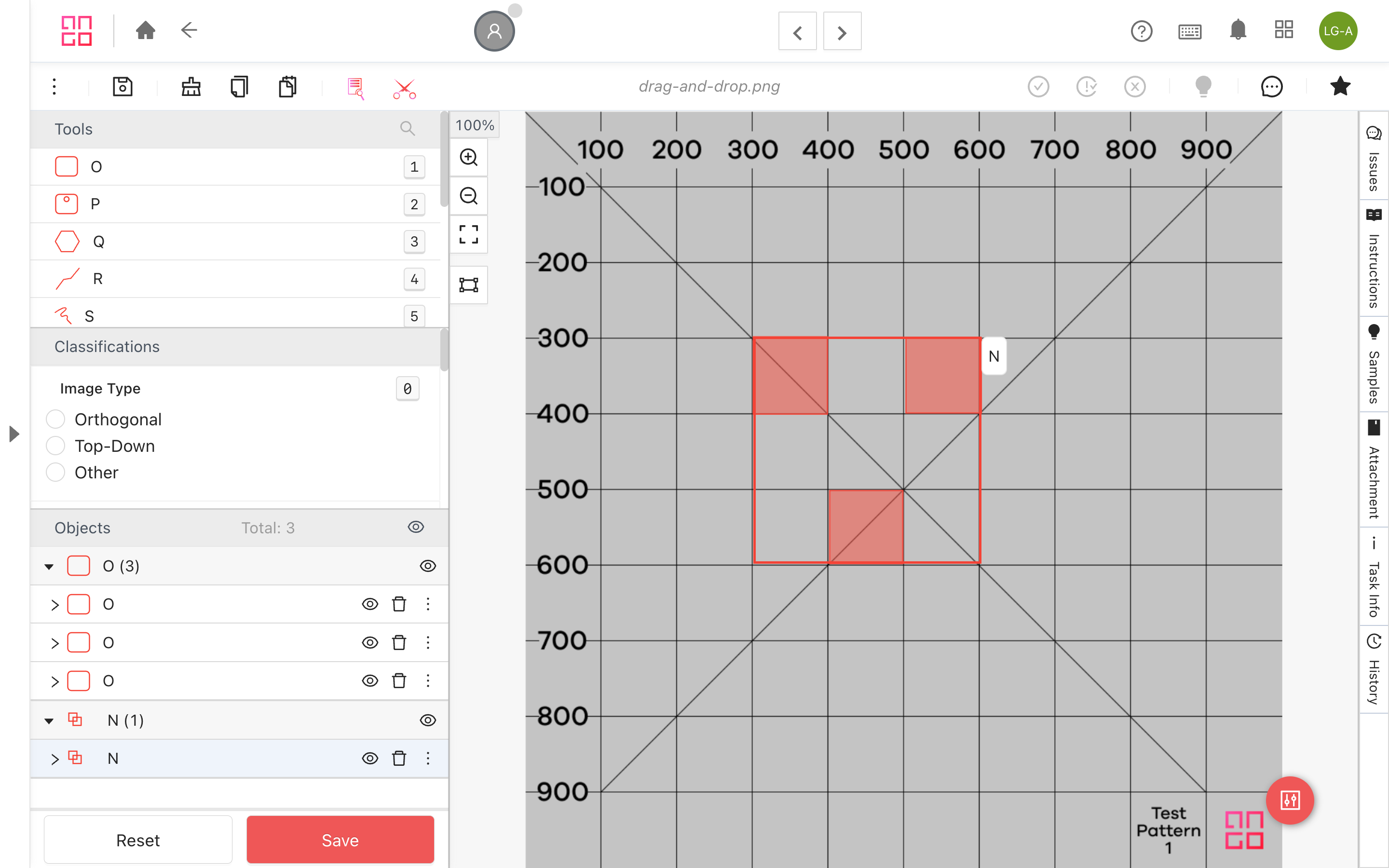
2. Click on any one of the *Group Relation* tools you have created from the *Tools* section on the left of the screen. Then, left-click on all annotations you wish to include. Press "N" on your keyboard when you are done to close the group relation.
{% hint style="info" %}
If you wish to add an annotation to more than one group relation:
1. Hide the relation it is currently part of by pressing "H" on your keyboard.
2. Add the annotation to the second group relation.
3. Press "Shift + H" to unhide all relations.
{% endhint %}
---
# Agent Instructions
This documentation is published with GitBook. GitBook is the documentation platform designed so that both humans and AI agents can read, navigate, and reason over technical content effectively. Learn more at gitbook.com.
## Querying This Documentation
If you need additional information that is not directly available in this page, you can query the documentation by asking a question.
Perform an HTTP GET request on the following URL with the `ask` and `goal` query parameters:
```
GET https://docs.imerit.net/labeling/labeling-tools/relation/group-relation.md?ask=&goal=
```
`ask` is the immediate question: it should be specific, self-contained, and written in natural language.
`goal` is what the user is ultimately trying to achieve, the reason they need the answer. Sharing it helps GitBook give you a better, more relevant answer. A goal is most helpful when it describes the outcome the user wants rather than restating the question. For example, with `ask=how do I create an API token`, a goal like `automate deployments from our CI pipeline` lets GitBook tailor the answer to that use case.
The response will contain a direct answer to the question and relevant excerpts and sources from the documentation.
Use this mechanism when the answer is not explicitly present in the current page, you need clarification or additional context, or you want to retrieve related documentation sections.